24 Jul 2009

The Red List of Moldova - Insects


INTRODUCTION

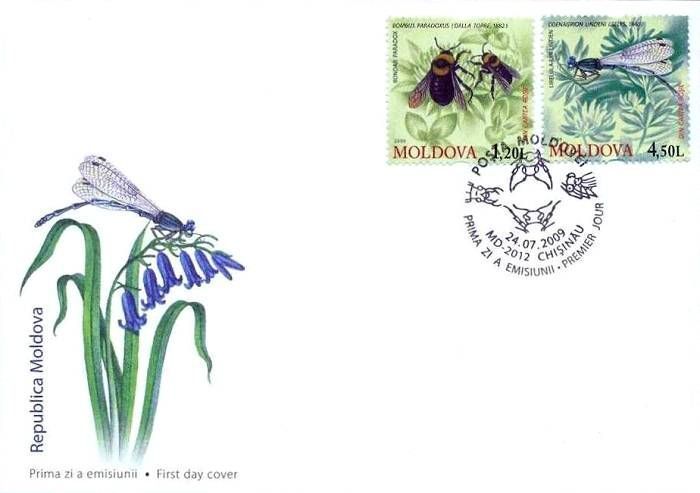
On 24 July 2009, the Post Office of Moldova (Poșta Moldovei) issued a series of postage stamps with the title The Red List of Moldova - Insects. The issue comprises four stamps, with associated cancellation (postmark) and first day cover (FDC). The designer was Oleg Cojocaru. The printing was performed by Tipografia Centrală, Chişinău.

ABOUT THE THEME

The IUCN Red List of Threatened Species (also known as the IUCN Red List or Red Data List), founded in 1964, is the world's most comprehensive inventory of the global conservation status of biological species. The International Union for the Conservation of Nature (IUCN) is the world's main authority on the conservation status of species. A series of Regional Red Lists are produced by countries or organizations, which assess the risk of extinction to species within a political management unit. Read more..
This article uses material from the Wikipedia article 'IUCN_Red_List', which is released under the Creative Commons Attribution-Share-Alike License 3.0.

ISSUE DETAILS


POSTAGE STAMPS


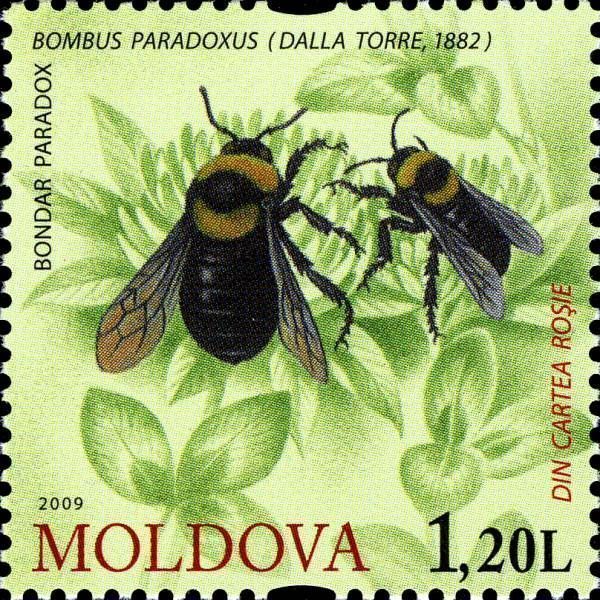
Bumblebee
№ 659 | Bumblebee

Bumblebee

  • Michel Catalogue No: 659
  • Perforation Type/Size: Comb Syncopated 13
  • Size: 34.00 x 34.00 mm
  • Face Value: 1.2 Lei
  • Quantity Printed: 150,000
A bumblebee is any member of the bee genus Bombus, in the family Apidae. There are over 250 known species, existing primarily in the Northern Hemisphere although they also occur in South America. They have been introduced to New Zealand and the Australian state of Tasmania. Read more..
This article uses material from the Wikipedia article 'Bumblebee', which is released under the Creative Commons Attribution-Share-Alike License 3.0.

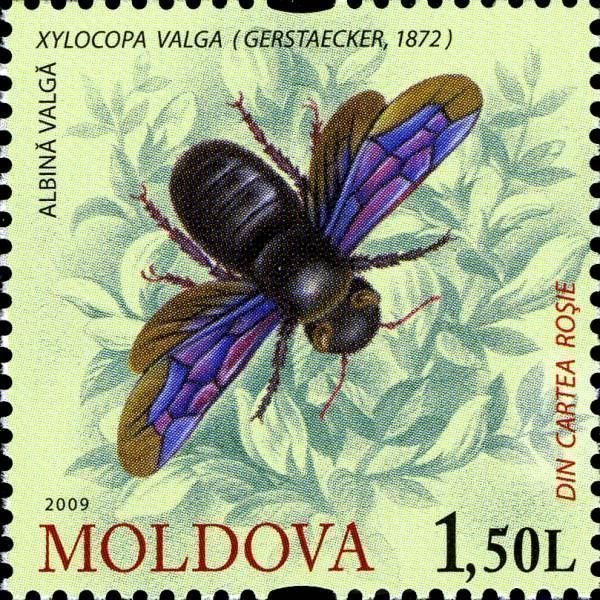
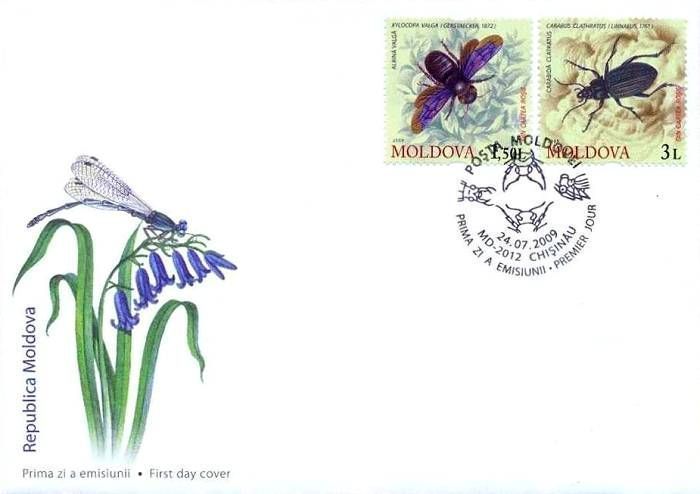
Carpenter Bee
№ 660 | Carpenter Bee

Carpenter Bee

  • Michel Catalogue No: 660
  • Perforation Type/Size: Comb Syncopated 13
  • Size: 34.00 x 34.00 mm
  • Face Value: 1.5 Lei
  • Quantity Printed: 150,000
Carpenter bees (the genus Xylocopa in the subfamily Xylocopinae) are large bees distributed worldwide. There are some 500 species of carpenter bee in 31 subgenera. Their name comes from the fact that nearly all species build their nests in burrows in dead wood, bamboo, or structural timbers (except those in the subgenus Proxylocopa, which nest in the ground). Members of the related tribe Ceratinini are sometimes referred to as 'small carpenter bees'. Read more..
This article uses material from the Wikipedia article 'Carpenter_bee', which is released under the Creative Commons Attribution-Share-Alike License 3.0.

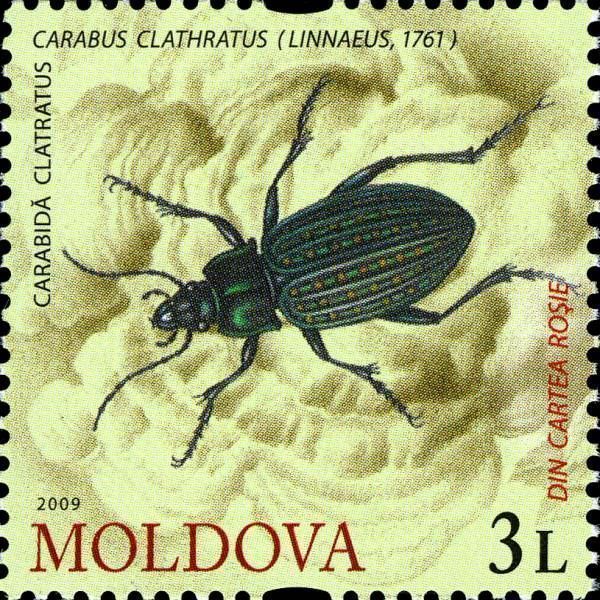
Carabus Beetle
№ 661 | Carabus Beetle

Carabus Beetle

  • Michel Catalogue No: 661
  • Perforation Type/Size: Comb Syncopated 13
  • Size: 34.00 x 34.00 mm
  • Face Value: 3 Lei
  • Quantity Printed: 100,000
Carabus is a genus of beetle in family Carabidae. The genus is highly diverse with 91 subgenera and more than 900 recognised species. The vast majority are native to the Palearctic, but there are also 11 Nearctic species. Carabus are 12–50 mm (0.47–2.0 in) long, most species are wingless and often very colourful. These are nocturnal, predatory beetles that feed on snails, earthworms and caterpillars. Read more..
This article uses material from the Wikipedia article 'Carabus', which is released under the Creative Commons Attribution-Share-Alike License 3.0.

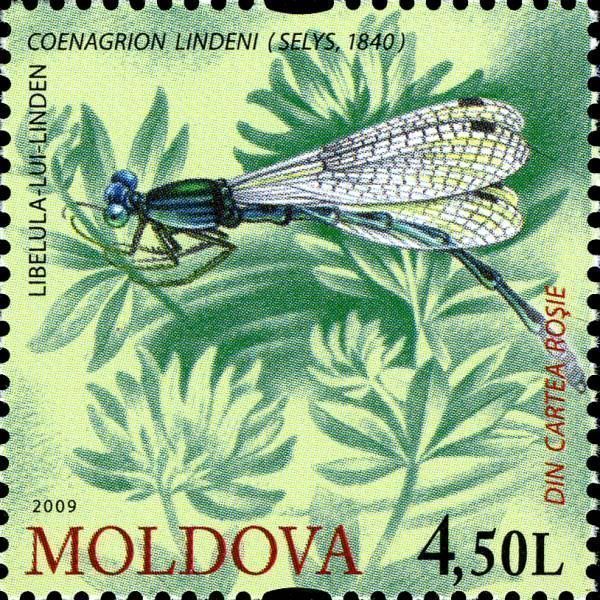
Goblet-Marked Damselfly
№ 662 | Goblet-Marked Damselfly

Goblet-Marked Damselfly

  • Michel Catalogue No: 662
  • Perforation Type/Size: Comb Syncopated 13
  • Size: 34.00 x 34.00 mm
  • Face Value: 4.5 Lei
  • Quantity Printed: 100,000
The Goblet-marked damselfly (Erythromma lindenii) is a medium-sized blue-and-black (or green-and-black) damselfly in the pond damselfly family (Coenagrionidae). It's a fairly common species in the South and West of Europe but is not found in the British Isles, Scandinavia and Eastern Europe. Erythromma lindenii was previously known as Coenagrion lindenii and Cercion lindenii. The Goblet-marked Damselfly is also known as the Blue-eye. It's an easily recognized species, with its wide antehumeral stripes, narrow postocular spots, the male's very bright-blue eyes. He has very long and curved appendages, and the spear-shaped marks on S3-S6 of his abdomen. It can also be found in Asia: Russian Federation and it is also found in Africa. Read more..
This article uses material from the Wikipedia article 'Goblet-marked_Damselfly', which is released under the Creative Commons Attribution-Share-Alike License 3.0.

FIRST DAY COVERS (FDC) AND CANCELLATIONS (POSTMARKS)


Cachet: Goblet-Marked Damselfly
№ 659-662 FDC | Goblet-Marked Damselfly

Cachet: Goblet-Marked Damselfly
№ 660-661 FDC | Goblet-Marked Damselfly

RELATED ITEMS

The Red List of Moldova - Insects 19971997
The Red List of Moldova - Insects
The Red List of Moldova - Fauna 19991999
The Red List of Moldova - Fauna
The Red List of Moldova - Birds 20032003
The Red List of Moldova - Birds
The Red List of Moldova - Flora. Shrubs 20042004
The Red List of Moldova - Flora. Shrubs
The Red List of Moldova - Fauna. Reptiles and Amphibians 20052005
The Red List of Moldova - Fauna. Reptiles and Amphibians
The Red List of Moldova - Fauna - Mammals 20062006
The Red List of Moldova - Fauna - Mammals
The Red List of Moldova - Edible Mushrooms (III) 20072007
The Red List of Moldova - Edible Mushrooms (III)
The Red List of Moldova - Fauna 20112011
The Red List of Moldova - Fauna

18 Jun 2009

Wild Flowers of Moldova


INTRODUCTION

On 18 June 2009, the Post Office of Moldova (Poșta Moldovei) issued a series of postage stamps with the title Wild Flowers of Moldova. The issue comprises four stamps, one on a souvenir sheet, with associated cancellation (postmark) and first day cover (FDC). The designer was Elena Karacenţev. The printing was performed by Tipografia Centrală, Chişinău.

ISSUE DETAILS


POSTAGE STAMPS


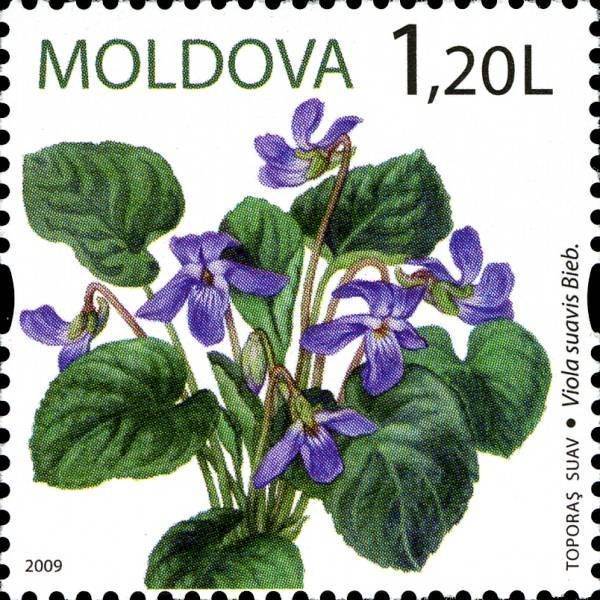
Viola
№ 655 | Viola

Viola

  • Michel Catalogue No: 655
  • Perforation Type/Size: Comb Syncopated 13
  • Size: 34.00 x 34.00 mm
  • Face Value: 1.2 Lei
  • Quantity Printed: 230,000
Viola (US /vaɪˈoʊlə/ and UK /ˈvaɪ.ələ/) is a genus of flowering plants in the violet family Violaceae. It is the largest genus in the family, containing between 525 and 600 species. Most species are found in the temperate Northern Hemisphere, however some are also found in widely divergent areas such as Hawaii, Australasia, and the Andes. Read more..
This article uses material from the Wikipedia article 'Viola_%28plant%29', which is released under the Creative Commons Attribution-Share-Alike License 3.0.

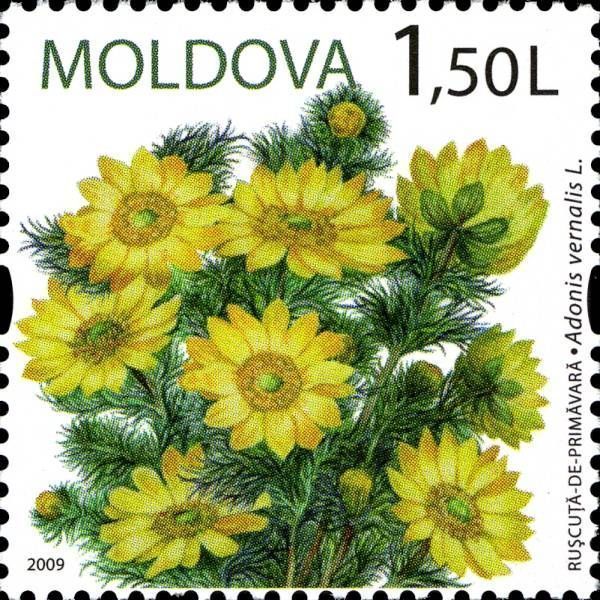
Spring Pheasants Eye
№ 656 | Spring Pheasants Eye

Spring Pheasants Eye

  • Michel Catalogue No: 656
  • Perforation Type/Size: Comb Syncopated 13
  • Size: 34.00 x 34.00 mm
  • Face Value: 1.5 Lei
  • Quantity Printed: 230,000
Adonis vernalis, known variously as pheasant's eye, spring pheasant's eye, yellow pheasant's eye and false hellebore, is a perennial flowering plant found in dry meadows and steppes in Eurasia. Isolated populations are found from Spain in the west across central and southern Europe, reaching southern Sweden in the north, with its main area of distribution being the Pannonian Basin and the West Siberian Plain. In contrast to most other European Adonis species, the flowers appear in springtime, and are up to 80 mm in diameter, with up to 20 bright yellow petals. Read more..
This article uses material from the Wikipedia article 'Adonis_vernalis', which is released under the Creative Commons Attribution-Share-Alike License 3.0.

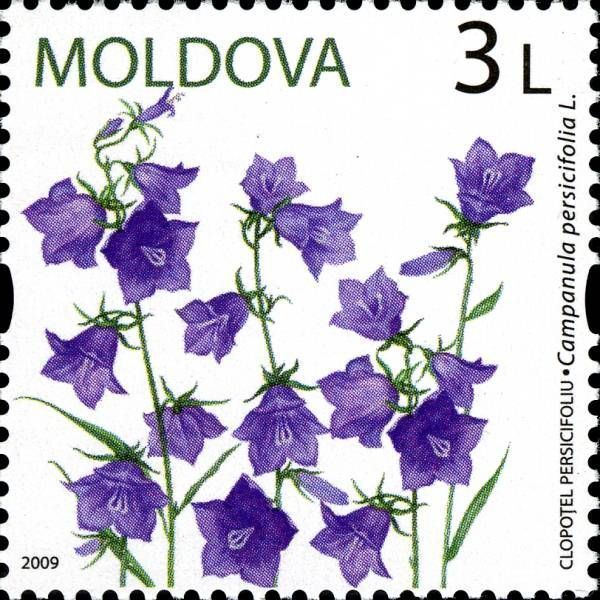
Campanula
№ 657 | Campanula

Campanula

  • Michel Catalogue No: 657
  • Perforation Type/Size: Comb Syncopated 13
  • Size: 34.00 x 34.00 mm
  • Face Value: 3 Lei
  • Quantity Printed: 130,000
Campanula /kæmˈpæn.juːlə/ is one of several genera in the family Campanulaceae with the common name bellflower. It takes its name from their bell-shaped flowers—campanula is Latin for 'little bell'. The genus includes over 500 species and several subspecies, distributed across the temperate regions of the Northern Hemisphere, with the highest diversity in the Mediterranean region east to the Caucasus. Read more..
This article uses material from the Wikipedia article 'Campanula', which is released under the Creative Commons Attribution-Share-Alike License 3.0.

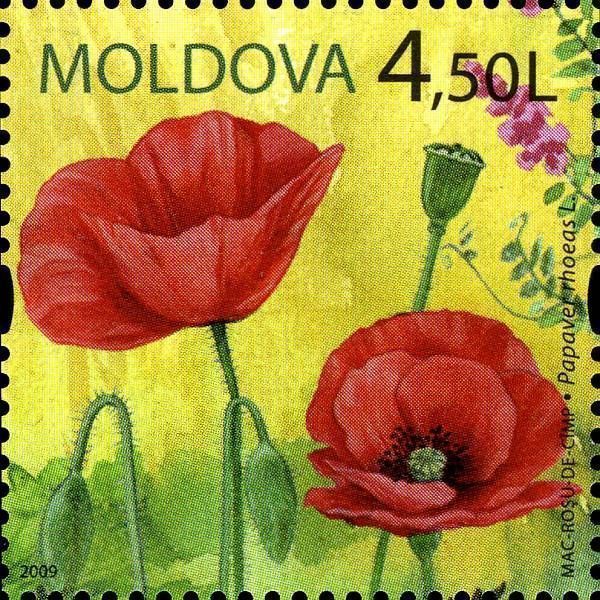
Poppy
№ 658 | Poppy

Poppy

  • Michel Catalogue No: 658
  • Perforation Type/Size: Comb Syncopated 13
  • Size: 34.00 x 34.00 mm
  • Face Value: 4.5 Lei
  • Quantity Printed: 50,000
A Poppy is a flowering plant in the subfamily Papaveroideae of the family Papaveraceae. Poppies are herbaceous plants, often grown for their colourful flowers. One species of poppy, Papaver somniferum produces edible seeds, and is also the source of the crude drug opium which contains powerful medicinal alkaloids such as morphine and has been used since ancient times as analgesic and narcotic medicinal and recreational drugs. Following the trench warfare which took place in the poppy fields of Flanders, during the 1st World War, red poppies have become a symbol of remembrance of soldiers who have died during wartime. Read more..
This article uses material from the Wikipedia article 'Poppy', which is released under the Creative Commons Attribution-Share-Alike License 3.0.

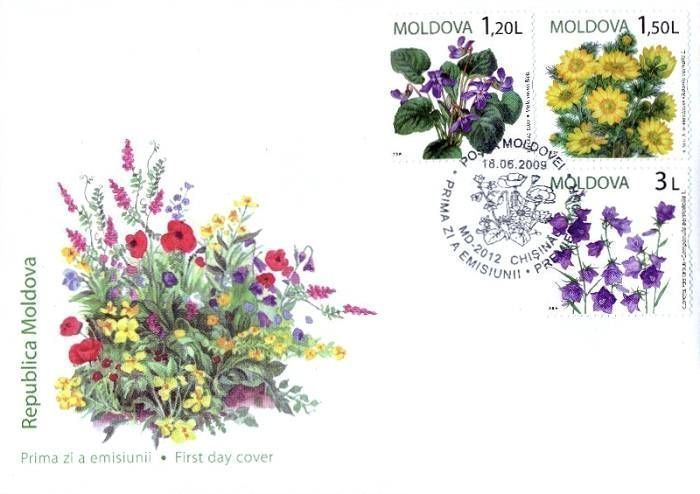
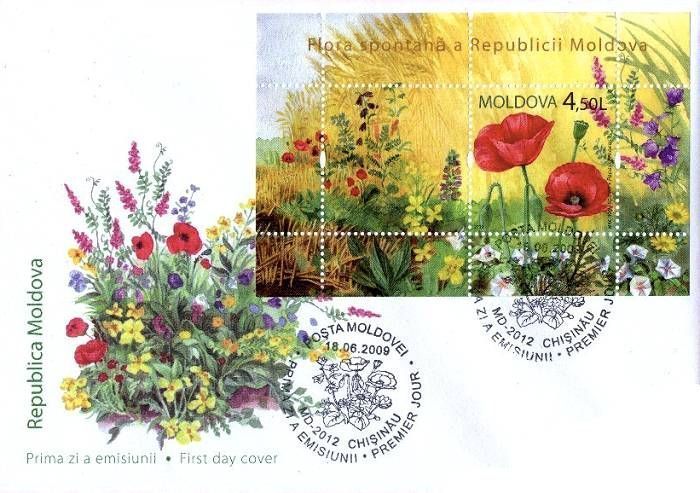
FIRST DAY COVERS (FDC) AND CANCELLATIONS (POSTMARKS)


Cachet: Bunch of Wild Flowers
№ 655-657 FDC | Bunch of Wild Flowers

Cachet: Bunch of Wild Flowers
№ Block 46 (658) FDC | Bunch of Wild Flowers

RELATED ITEMS

Flora - Flowers 19931993
Flora - Flowers
Art: Paintings of Flowers 20102010
Art: Paintings of Flowers
Flowers 20112011
Flowers